Search This Blog

Monday, 26 September 2011

BIAZA Conference

Last week I attended a conference for Zoological horticulturists. The main reason for attending the event was to give a presentation on Myddelton House Gardens followed by a tour of the gardens highlighting the restoration work as well as the horticultural practices we undertake in the garden. I was sent the full programme of the conference a few days before and realised that there was a great benefit for me if I was able to attend. I was delighted that this was possible.

The organisation that has put on the conference is the British and Irish Association of Zoo and Aquariums (BIAZA). For details please click on the link below. They hold a conference within the UK annually open to all zoological gardeners. This year it was held at Paradise Wildlife Park Broxbourne, up the road from Myddelton.


http://www.biaza.org.uk/


A view from the Lunch table!


I thoroughly enjoyed the two days of the conference with presentations on subjects from alien aquatic species to which tender plants you can select for our climate.

 http://pwpark.com/index.html

Alister introducing the East Gardens - Hatfield House

Vegetable Garden - Hatfield House


Hatfield House Maze

The conference proved a great source for sharing horticultural practices as well as networking with fellow professional horticulturists from zoos such as Paignton, Chester Edinburg, Bristol etc. Following the first day I returned that evening to attend a BBQ at Paradise Wildlife Park. Part of the evening was spent experiencing some of the park and the animals. We were allowed to feed Meerkats and Lemurs. The highlight for me, however, was watching the visual health check of a White Lion. The keeper Aaron used fresh meat to position the 35 stone lion at the optimum place against the enclosure fence. Although we were separated by a fence, we were all affected every time the lion roared - well every one but Aaron. What an experience!

Open House

Myddelton House Gardens opened the front door of the main house for the annual Open House day on 18th September. The doors opened at 10am. Members of the E. A. Bowles of Myddelton House Gardens Society were stewarding within each room of the of the ground floor. It is a wonderful opportunity for visitors to view the property and to see exactly how Mr Bowles had the house with the aid of photographs and text. It brings alive what is now essential offices and meeting rooms for the Lee Valley Regional Park Authority with tales and anecdotes from members of the Bowles Society members.

Nearly 400 members of the public passed through the house. I greeted visitors whilst also promoting the heritage variety potatoes we are selling. A total of 27 2.5kg bags of potatoes were sold during the day.

This event alway proves to be a good opportunity to talk to people regarding membership of the E A Bowles of Myddelton House Society and to explain the benefits of becoming a member. For more information on membership please click on the link below which will direct you to their website.


http://eabowlessociety.org.uk/

Monday, 19 September 2011

Coach Trip

On Saturday 10th September I joined The E A Bowles of Myddelton House Gardens Society on a coach trip. We left Myddelton at 9am headed for Hyde Hall the Royal Horticultural Society (RHS) garden in Essex. When we arrived Ian Le Gros, the curator, welcomed us and told us about all the developments that have been happening in the gardens since the RHS was given the property in 1993 by Dick and Helen Robinson. A recent development is the new visitors centre which opened a couple of years ago. It is a modern building with clean lines constructed from timber, glass and stainless steel. Although it is very smart it does not have the same ‘oldie worldy’  atmosphere of the old barn which is situated at the top of the hill close to the house. The barn serves a range of hot and cold food. Bryan and I tucked into bowls of delicious butternut squash soup. I had not visited the garden for the last couple of years and although the main structure was much the same. I would like to visit again in a years time to see how the extension to the dry garden has been planted and started to establish.
 
 
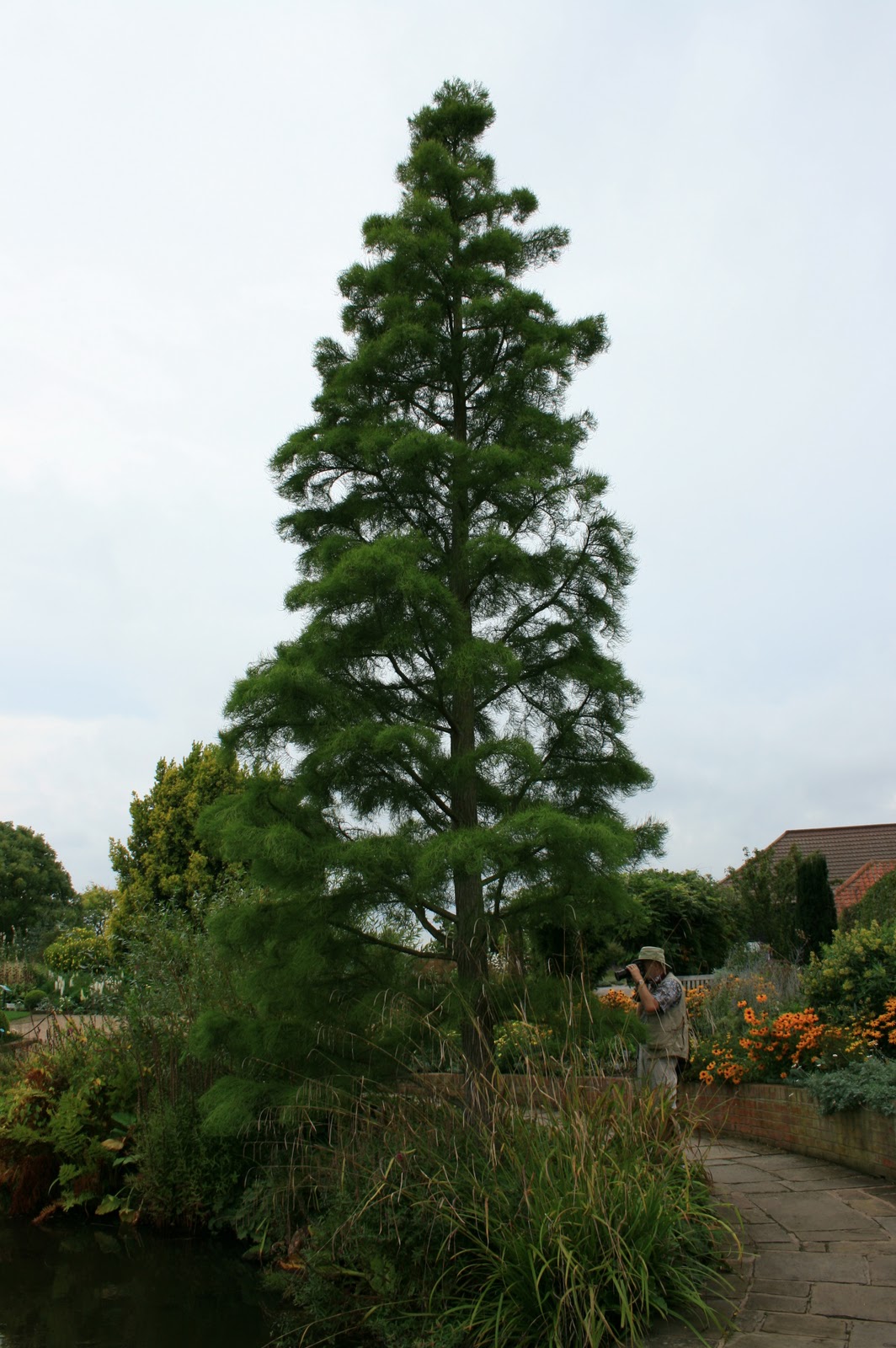
A tree that has always fascinated me for years, due to its quirky growth habit is
Taxodium distichum var. imbricarium 'Nutans'. It is a tree that I first discovered whilst studying at the Sir Harold Hillier’s Garden and Arboretum near Romsey Hampshire.


Following lunch we boarded the coach for our second garden of the day which was closer to home. Copped Hall in Epping Forest, once a large family run estate, fell into disrepair once the family left in the 1940's. The family abandoned the grand house following a electrical fire that gutted the majority of the house in 1917. The family moved to another smaller property on the estate. The naked architecture of this mansion is fascinating to see as the vast majority of the plaster and wooden panelling is no longer present. The houses’ remarkable survival is due to a wonderful band of dedicated volunteers that managed to purchase the house and gardens in 1995 after many years of fight to protect the house from being converted into a hotel, luxury apartments, a golf course and even from demolition. The house and garden continue to be supported and restored solely by volunteers with the occasional skilled craftsman brought in for specialist work. This is a remarkable feat of volunteering power. I would recommend a visit. I will certainly continue to visit the house and garden following its progress.
 
Close to the racket house, which is now used to serve refreshment on open days, stands a large specimen of
Taxodium distichum Swamp cypress. This tree shows no signs of knees because there is no water in the vicinity.
 
The tour took in the extensive basemet

The south facing wall with diamond shape black decorative brick work which has faded more on this southerly aspect 

The wonderful boarder planted and  maintaned by only one volunteer 

The grand iron entrance gates

Copped Hall